
No products in the cart.

Hot Foil Printing
What Is Hot Foil Printing?
19
Apr
Apr
A plain printed piece can do the job. A foiled one tends to get held for a second longer.
That extra moment matters when you are handing over a business card, presenting a gift card, dressing a menu cover or adding authority to a certificate. If you are asking what is hot foil printing, the short answer is simple: it is a print finishing process that uses heat and pressure to apply a metallic or pigmented foil onto a surface, creating a sharp, reflective or solid-colour design that stands out from standard ink.
For businesses that want print to look more premium without becoming overcomplicated, hot foil printing is one of the most effective options available. It gives branding a tactile, deliberate finish and works particularly well where presentation supports perceived value.
What is hot foil printing and how does it work?
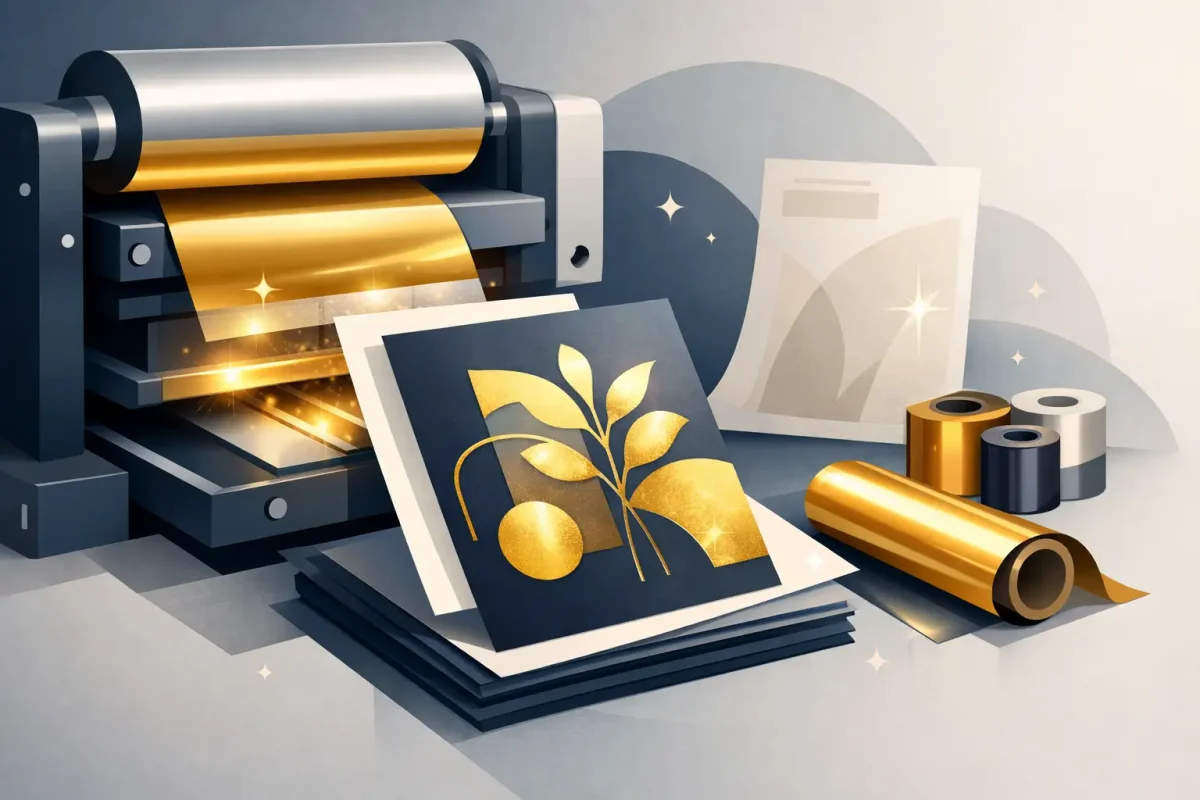
Hot foil printing is a transfer process rather than a conventional ink print process. A metal die is made with your artwork, logo or message. That die is heated and pressed against a roll of foil and the chosen substrate, such as card, paper, label stock or certain plastics. The heat and pressure release the foil from its carrier film and bond it to the material underneath.
The result is clean, precise and visually distinct. Unlike flat printed ink, foil sits on the surface as a finish, so it catches the light differently and gives a stronger sense of texture and contrast.
This is why hot foil printing is often used for logos, names, borders, crests, numbering, loyalty card details, packaging accents and formal print pieces. It is not there to replace standard print. It is there to add emphasis where emphasis pays off.
Why businesses choose hot foil printing
The main commercial reason is straightforward: it makes printed items look more valuable.
For hospitality venues, foil can lift menu covers, reservation cards or branded presentation folders. For salons and retailers, it can add polish to loyalty cards, appointment cards, gift vouchers and packaging elements. For event organisers, it gives invitations, credentials and certificates a more considered finish. For professional services, it can help business cards and document covers feel more established and trustworthy.
That does not mean every item needs foil. In fact, restraint usually works better. A small foiled logo on a well-designed card often looks stronger than a heavily foiled layout with too many competing elements.
Hot foil printing also suits businesses that need consistency across different premium items. If you already use branded cards, folders, certificates or labels, foil can help tie those pieces together with a recognisable finish.
What materials can be hot foil printed?
Hot foil printing is highly versatile, but suitability depends on the stock and the intended result.
Paper and board are common choices, especially for business cards, invitations, presentation folders, packaging sleeves and certificates. Smooth uncoated and coated stocks can both work, though the finish can appear different depending on texture. A very textured stock may give a less crisp foil edge, while a smoother sheet usually produces sharper detail.
Plastic card products are also a strong application, especially for membership cards, loyalty cards, key tags and gift cards. On plastic, foil can create a premium branded effect that standard print alone may not achieve.
Labels, menu covers and selected promotional items can also be suitable, provided the substrate is compatible with the process and the artwork is prepared with foil in mind.
This is where practical advice matters. Not every stock, size or design is equally suited to hot foil printing, so the best result often comes from matching the finish to the material rather than treating foil as a generic add-on.
Common foil colours and finishes
Gold and silver are the most recognised foil options because they immediately signal quality and contrast well with many brand palettes. They are common for certificates, gift cards, formal stationery and premium business cards.
But hot foil printing is not limited to metallics. Many projects use black, white, red, blue or other pigmented foils when the aim is bold contrast rather than shine. There are also gloss, satin, holographic and speciality finishes for more specific visual effects.
The right choice depends on context. A luxury retail brand may suit metallic gold. A modern salon may prefer copper or rose gold. A hotel using dark menu covers may get more impact from silver. A certificate of authenticity may call for a combination of foil and other security or presentation elements.
The commercial point is this: foil should support the brand, not distract from it.
Where hot foil printing works best
Hot foil printing is strongest when used on items people handle, keep or notice up close.
Business cards are an obvious example because the finish adds impact at the point of introduction. Gift cards and loyalty cards also benefit because they are part of the customer experience and often stay in a wallet or purse for weeks or months. Certificates, membership cards and authenticity documents gain credibility from foil because it suggests permanence and care.
Menus, presentation folders and invitation covers are also good candidates. In these cases, foil helps frame the item as part of the brand experience rather than just a practical printed object.
It is less useful for short-life items where speed, quantity and low unit cost matter more than finish. A flyer for a one-day promotion, for example, may not need foil at all. The value comes when the item represents the business after the first glance.
The difference between hot foil printing and digital foil
Buyers often compare hot foil printing with digital foiling, and the distinction matters.
Hot foil printing uses a custom die, heat and pressure. That makes it particularly strong for consistent, sharp results on repeat runs and for designs where the foil element needs to look crisp and well-defined. It has a more traditional production method and is widely regarded as the premium option for many applications.
Digital foil usually does not require a metal die in the same way. That can make it more flexible for some shorter runs or variable designs, depending on the product and equipment used. However, the finish, adhesion and suitability can vary.
There is no universal winner. If you need a classic premium finish, strong definition and a result suited to branded repeat production, hot foil printing is often the better fit. If your project is highly variable or has different setup priorities, another method may be worth considering. It depends on quantity, artwork, substrate and budget.
Design considerations before you order
Foil is not just a colour swap. It behaves differently from ink, so artwork should be built around that.
Very fine lines, tiny reversed text and large solid foil areas can all create challenges. Fine detail may not hold as well as expected, and very large blocks of foil can sometimes show imperfections more readily than smaller, controlled elements. Clean logos, initials, headings, borders and simple graphic accents usually perform best.
Placement also matters. Foil works best when it has space around it. If every element competes for attention, the effect is weakened. For many commercial jobs, the strongest approach is to keep the foil to the brand mark or one key design feature and let the rest of the print do its supporting work.
This is also why samples and artwork checks are useful. They help confirm whether the chosen stock, foil colour and design are likely to produce the finish you want before moving into production.
Is hot foil printing worth the extra cost?
Often, yes – but not automatically.
Hot foil printing involves additional setup, tooling and finishing, so it usually costs more than standard print alone. Whether it is worth it depends on the role of the product. If the printed item helps shape brand perception, supports repeat custom, carries a retained value or needs to feel premium in the hand, foil can be a sensible investment.
A hotel loyalty card, for example, may justify foil because it reflects the brand every time it is used. A gift voucher sold at a premium value may benefit from a more polished finish. A certificate or presentation folder may need that extra authority. On the other hand, if the item is entirely functional and disposable, the additional cost may not add much commercial return.
The useful question is not whether foil looks nice. It is whether the finish improves how the item is received, kept or remembered.
What is hot foil printing best suited to?
It is best suited to branded print that needs to feel deliberate, polished and professionally produced.
That includes premium cards, folders, certificates, menus, invitations, labels and selected packaging or retail materials. It also suits businesses that want one supplier capable of handling both day-to-day print and more specialist finishes across a wider print range.
For many organisations, that balance matters. You may need straightforward flyers, NCR forms or posters one week, and foiled gift cards or branded presentation items the next. Working with a print specialist that understands both the everyday and the more specialised side of production makes the buying process simpler and the results more consistent.
If you are considering hot foil printing, start with the item that carries the most brand weight. That is usually where the finish earns its place best.