

Design, hotel key card
How to Design Hotel Keycards That Work
Apr
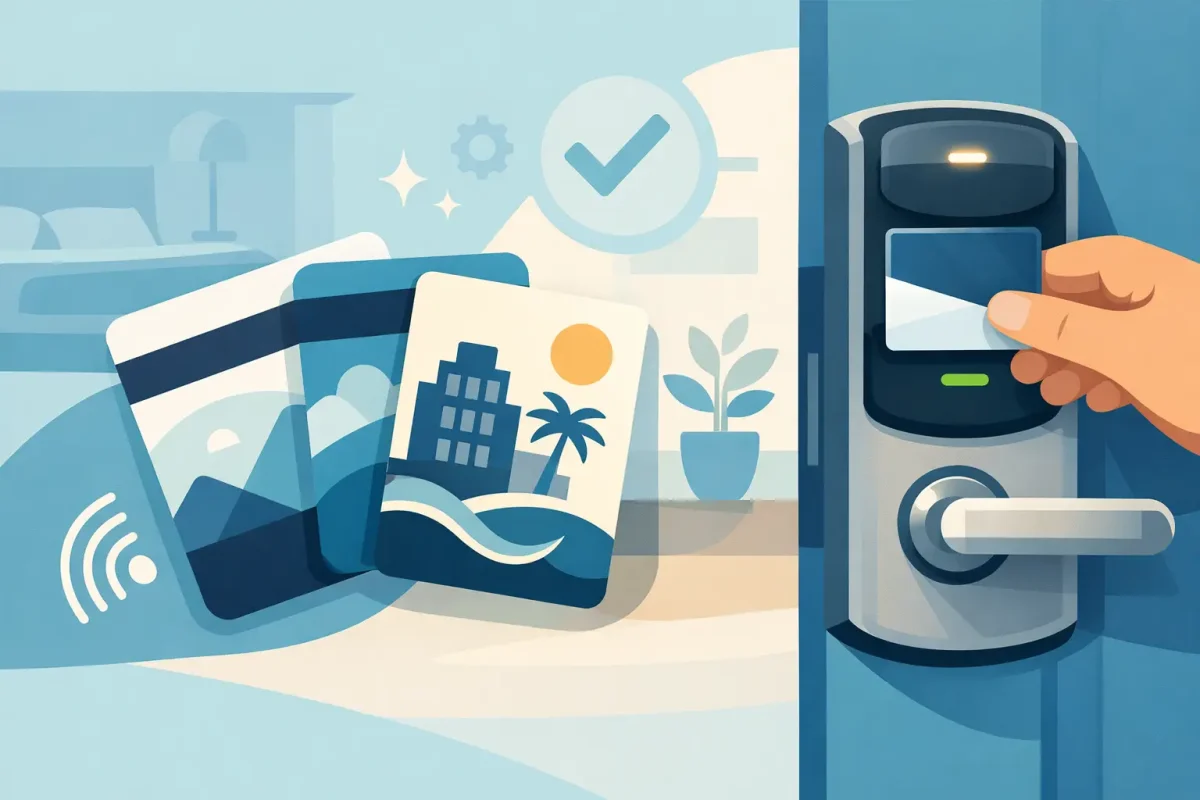
A hotel keycard gets handled more than most printed items in the building. It is picked up at reception, slipped into wallets and pockets, used at room doors, and often kept as a reminder of the stay. That is exactly why knowing how to design hotel keycards properly matters. A good design does more than look smart – it supports your brand, stays readable, and works reliably in day-to-day use.
For hotels, aparthotels, spas and serviced accommodation, keycards sit in a practical middle ground between branding and function. They need to look professional, but they also need to survive repeated handling and leave enough space for the technical elements that make the card usable. If either side is overlooked, the card can end up attractive but awkward, or functional but forgettable.
How to design hotel keycards with the end use in mind
The first decision is not colour or finish. It is how the card will be used in your property. Some hotels want a clean branded card that simply opens guest rooms. Others use keycards as part of a wider guest journey, with directions, Wi-Fi details, bar offers or spa messaging worked into the design.
That choice affects the whole layout. If the card needs to carry extra information, space becomes tighter very quickly. If the card is purely for access, the design can be more minimal and brand-led. Neither approach is automatically better. It depends on your guest profile, your check-in process and how much information staff already provide elsewhere.
A business hotel may prefer a clear, understated card with room for branding and basic instructions. A leisure venue may get more value from adding restaurant times or a reminder about facilities. The key is to avoid trying to make one small card do too much.
Start with brand consistency
Hotel keycards should feel like part of the same system as your signage, menus, room collateral and welcome materials. If the card uses a different typeface, unrelated colours or an off-brand tone, it weakens the guest experience rather than supporting it.
Consistency does not mean copying your logo onto a plain background and stopping there. It means using the same visual language that guests see elsewhere in the property. That could be a restrained luxury palette, a warm boutique style, or a crisp corporate look. The card should fit naturally alongside your wider print materials.
This is especially important for groups and multi-site operators. A standardised card format helps maintain recognition across locations, while still allowing small adjustments for individual properties if needed. For independent hotels, consistency gives the brand a more established, organised feel.
Keep the layout simple
The best hotel keycards are usually straightforward. One side may carry the main brand identity, while the other handles practical information. That split makes the card easier to scan at a glance and avoids visual clutter.
A crowded card can create several problems. Important text becomes too small, logos lose impact, and guests are less likely to notice the details you want them to read. Simplicity is not just a style choice. It improves usability.
If you include instructions such as where to tap, insert or swipe the card, keep the wording brief. If you add Wi-Fi details, check-out times or contact information, prioritise what guests genuinely need during the stay. Room for branding should still be protected.
What to include on a hotel keycard
Most hotel keycards work best when they include only the essentials. That usually means your logo, brand colours, a short instruction if needed, and any practical information that supports the stay without overwhelming the design.
In some cases, a short promotional message can work well, especially for on-site dining, spa services or loyalty schemes. But it needs restraint. A keycard is not a flyer. If every available inch is used to sell, the card starts to look cheap, even if the print quality is good.
Choose colours and finishes for practical reasons as well as style
Colour choice affects more than appearance. Very pale designs can show marks quickly. Very dark designs can make scratches more noticeable, depending on the finish and how the cards are handled. Busy patterns can also interfere with readability if you are adding small text.
That does not mean you have to play safe with plain white cards. It means matching your design to realistic use. A heavily used card in a busy hotel has different demands from a premium card for a small boutique property with lower guest turnover.
Finishes matter for the same reason. Gloss can look sharp and help colours stand out, while matt often gives a more refined appearance and can reduce glare. Specialty finishes, including metallic effects or foil elements, can lift the presentation when used in moderation. The right choice depends on your brand position and the impression you want to create at check-in.
For many hotels, durability should carry as much weight as appearance. If the card quickly looks worn, the guest notices.
Leave space for technical requirements
One of the most common mistakes in hotel keycard design is treating the card like a standard promotional plastic card. Hotel access cards have functional areas that may need to remain clear, depending on the technology being used and the print method involved.
That is why artwork should be planned with production in mind from the start. If magnetic stripes, encoding areas, signature panels or other technical features are part of the specification, they need proper positioning and enough clear space. Ignoring that at the design stage can lead to avoidable revisions or a compromised layout.
This is also where working from an accurate template matters. A design that looks fine on screen can fail once trim, safe area and machine-readable zones are applied. Good artwork is not only about what sits on the card, but where it sits.
How to design hotel keycards for print accuracy
Print accuracy comes down to setup as much as creativity. Use high-resolution artwork, keep key text away from the trim edge, and make sure brand colours are prepared correctly for print rather than just for screen viewing.
Small details make a difference here. Fine lines may not reproduce well if they are too delicate. Light text on a pale background may disappear under certain lighting conditions. A dark image behind essential instructions can reduce legibility. These are practical design issues, not minor finishing points.
If your hotel has strict brand guidelines, it is still worth sense-checking them against the card format. Not every brochure or signage style translates neatly onto a small plastic card. Sometimes a simplified adaptation is the better commercial choice.
Think about guest handling
A hotel keycard is handled quickly and often in poor lighting. Guests may be arriving late, carrying bags, managing children, or checking in after travel delays. The card should be easy to understand without effort.
That means orientation should be obvious. If the card needs to be inserted a certain way, the design should help rather than confuse. If the card doubles as an energy-saving room slot activator, that may also affect how instructions are displayed.
Readable type matters more than decorative type. Contrast matters more than novelty. If your branding relies on subtle design choices, keep those, but do not let them get in the way of usability.
Match the design to the level of the property
Not every hotel needs the same keycard design approach. A budget-friendly chain may prioritise durability, clarity and cost control. A premium venue may want a heavier visual emphasis on finish, texture and presentation. A spa hotel may prefer a softer, quieter look than a city-centre business property.
The right answer depends on where the card sits in your wider guest experience. If your check-in desk, room folders and menus all carry a premium feel, a generic-looking keycard can stand out for the wrong reason. On the other hand, over-specifying the card where volume is high and replacement rates are frequent may not be the most practical use of budget.
That balance between appearance, durability and cost is usually where the best decisions get made.
Test before full production
Before signing off a full run, it makes sense to review a physical sample where possible. Screen proofs are useful, but hotel keycards are tactile products. Finish, readability, colour strength and overall feel are easier to judge in hand.
This step is particularly useful if you are introducing a new brand identity, changing card technology, or moving to a more premium print finish. A sample can reveal issues that are easy to miss in a digital file, from weak contrast to awkward positioning.
For hospitality operators ordering at scale, this is also a chance to confirm that the design works across different lighting conditions and front desk routines. Practical testing often saves time later.
A well-designed hotel keycard does a quiet but valuable job. It supports the brand, helps the guest, and stands up to regular use without fuss. If you approach it as both a printed product and a working part of the stay, you are far more likely to end up with a card that earns its place rather than just filling it.