

Hot Foil Printing
Hot Foil Printers: Why Luxury Stamping Still Sells
Sep
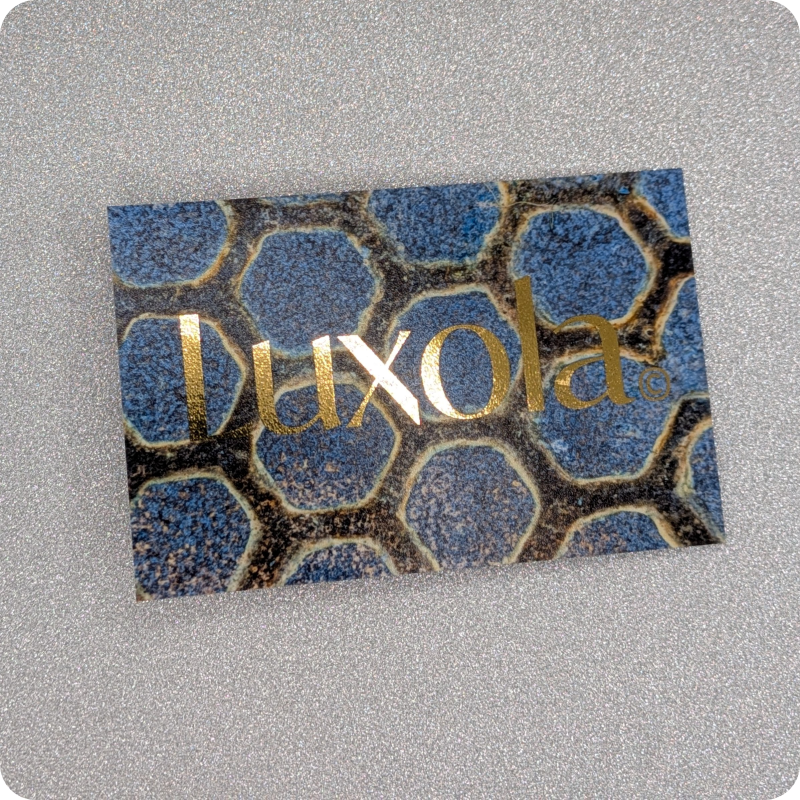
Digital print has made almost everything cheap, fast and variable. Hot foil printers have done none of that, and that is precisely why they still matter. A hot foil stamping machine applies metallic or coloured foil onto a surface using heat and pressure, and the result is something a toner-based press cannot fake: a genuine metal layer sitting proud of the sheet, catching the light as the card or box moves.
For businesses that sell on how their brand feels in the hand, that difference is the whole point. What follows explains how foil stamping works, which materials take it well, how the machines differ, and how to decide between buying a press and commissioning a printer.
What a hot foil printer actually does
Hot foil stamping is a classic relief printing method. It uses heat and pressure to press a thin layer of metallic foil onto paper, leather and similar substrates. Three elements do the work together:
- A heated die carrying the design in reverse
- A roll or sheet of foil sitting between die and material
- Downward pressure that releases the foil layer only where the die touches
Because the foil transfers only at the points of contact, the finish stays crisp and localised. A single logo or a few words can be foiled without treating the rest of the sheet. The palette is not limited to gold and silver either. Suppliers now offer a wide range of foil colours, from bright metallics to softer tones that suit quieter branding.
Why foil survives in a digital world
Sheet-fed digital presses excel at speed, versioning and short runs. What they cannot do is lay down a reflective metal surface. Ink and toner sit in or on the paper and reflect light flatly. Foil is a thin film of metal transferred physically onto the substrate, so it throws light back at certain angles and almost vanishes at others. That shifting quality is what people read as premium.
The effect matters most where print is touched and kept: business cards handed across a table, invitations opened slowly, membership and gift cards living in a wallet, packaging that gets a second look before it is thrown away. Foil gives those objects a weight that screens cannot reproduce. On a monitor, a foiled design reads as a flat gold shape. In the hand, it moves.
Materials that take hot foil well
Foil stamping is widely used on leather, PVC, cloth, plastic film, paper and similar surfaces, and trade printers describe finishes that run from plastic through to glass. The table below sets out where each tends to appear.
| Material | Typical uses | What to watch |
|---|---|---|
| Paper and board | Business cards, invitations, packaging, booklets | Coatings and laminates change how cleanly foil releases |
| Leather | Belts, wallets, bags, bookbinding, promotional goods | Grain and finish vary, so test on the actual hide |
| PVC and plastic film | Membership, loyalty and gift cards, signage | Heat settings need care to avoid marking the plastic |
| Cloth | Labels, textile branding, uniforms | Weave texture shows through the foil |
| Glass and specialist finishes | Awards, promotional items, packaging | Usually a specialist job rather than a routine run |
If a material is not on this list, that does not mean foil is impossible. It means the job needs a sample, which most trade printers will supply before committing to full production.
The machines: tabletop presses and digital automatic foil printers
Foil equipment splits broadly into hand-built and tabletop presses at one end and digital automatic units at the other. Both apply the same principle of heat and pressure, but they suit very different users.
Tabletop and hand-built presses
Tabletop foil printing machines are the traditional route. An operator loads a die, sets temperature and pressure, and stamps one impression at a time. Some are hand-built rather than mass-produced, and at least one UK manufacturer builds hot foil machines by hand and supplies brass and magnesium dies designed to last. These machines appeal to bookbinders, leather workers, small studios and anyone personalising goods in short batches. The trade-off is labour: every impression is a separate action.
Digital automatic foil printers
Digital automatic foil printers change the workflow. Rather than cutting a die for every job, the operator prepares a design on a computer and the machine prints words, logos and pictures onto the material. At least one machine on the market is described in exactly those terms. For a business that personalises names, dates or one-off artwork, that flexibility removes the cost and lead time of a fresh die with every change.
Dies are half the story
A hot foil press is only as good as the die it carries. Brass and magnesium are the two standard die materials, and quality varies between makers. A well-made die holds fine detail, survives repeated impressions and keeps its edges sharp over long runs. A poor one loses definition early, and that loss shows in every card or box produced afterwards.
This is why buyers of machines and buyers of print services end up asking the same question: who makes the die, and to what standard? Anyone commissioning foil printing should put that question to a supplier directly.
Buying a machine or commissioning a printer
The decision usually comes down to volume and control. A starter kit gives an indication of entry pricing. One supplier lists a full kit, including machines, brass letters, dies and leather goods, at £850.00 including VAT. That is a complete personalisation setup rather than a single press, so it suits a studio planning to foil names, initials and short text onto goods it already sells.
Commissioning has the opposite profile. Trade printers run foil services nationwide with specialist metallic printing and stamping machines, and some cover unusual substrates such as glass alongside plastic. For a business that needs a few thousand foiled cards, packaging or invitations once or twice a year, outsourcing avoids capital cost, die storage and operator training. Expect to supply artwork and approve a sample first.
Questions worth asking before you commit
Foil is a mature process, but the details are not uniform across suppliers or machines. Which machine suits a given job, what a press really costs once dies and foil are added, and what the genuine drawbacks are for a particular run length are all questions with varying answers. Confirm them with the supplier or manufacturer, because the response depends on material, design and quantity.
Useful checks include:
- Can the supplier or manufacturer provide a physical sample on your chosen material?
- Is the die included in the quoted price, and who keeps it afterwards?
- What is the minimum order for a foiled run?
- How does the finish behave if the item is handled daily, laminated or wiped clean?
- What artwork format does the press need?
Where foil earns its place
Foil works hardest when used sparingly. A single metallic logo on a matte business card, a name on a leather tag, a foil-blocked title on a booklet cover, gilt-edged details on an invitation: these are small areas with large visual returns. Cover a whole sheet and the effect flattens, partly because there is no contrast left and partly because the material stops looking special.
That instinct, restraint, is the same one keeping hot foil printers in business while so much else has moved to screens. The process is slow, physical and tied to a die. It also produces something you can hold, and holding is still how people decide whether a brand feels expensive.
Frequently Asked Questions
Common queries about hot foil printers tend to cover machine choice, materials, cost and whether to buy or outsource.
What kind of printer do I need for foiling?
You need a hot foil stamping machine, not a standard office or digital printer. Options range from tabletop and hand-built presses, which stamp one impression at a time, to digital automatic foil printers that take a design from a computer and apply foil without a custom die for every change. Confirm the specification with the supplier before buying, because machine capability varies.
What materials can a hot foil printer stamp?
Foil stamping is widely used on leather, PVC, cloth, plastic film and paper, and trade printers advertise finishes running from plastic through to glass. Paper and board remain the most common substrates for cards, packaging and invitations, while leather suits personalisation and PVC covers membership and gift cards. Always request a sample on your own material first.
How much does a hot foil press cost?
Pricing depends on the machine, the dies and the accessories included. As a reference point, one supplier lists a full starter kit containing machines, brass letters, dies and leather goods at £850.00 including VAT. A single tabletop press, a digital automatic unit or a bespoke industrial machine will sit at different points, so ask for a current quote rather than relying on older figures.
Can hot foil be applied to plastic cards?
Yes. PVC is one of the materials regularly foiled, and trade printers describe coverage that runs from plastic to glass. Membership, loyalty and gift cards are common applications. Because plastic reacts differently from paper under heat, temperature and pressure need to suit the specific card stock, so ask for a sample before a full production run.
Should I buy a foil machine or outsource the printing?
Buy if you personalise regularly and want control over turnaround, since a starter kit can cover machines, dies, brass letters and leather goods in one purchase. Outsource if your foil work is occasional or high volume, because trade printers run foil services nationwide and handle dies, setup and operator skill for you. Match the choice to how often you will actually use it.