


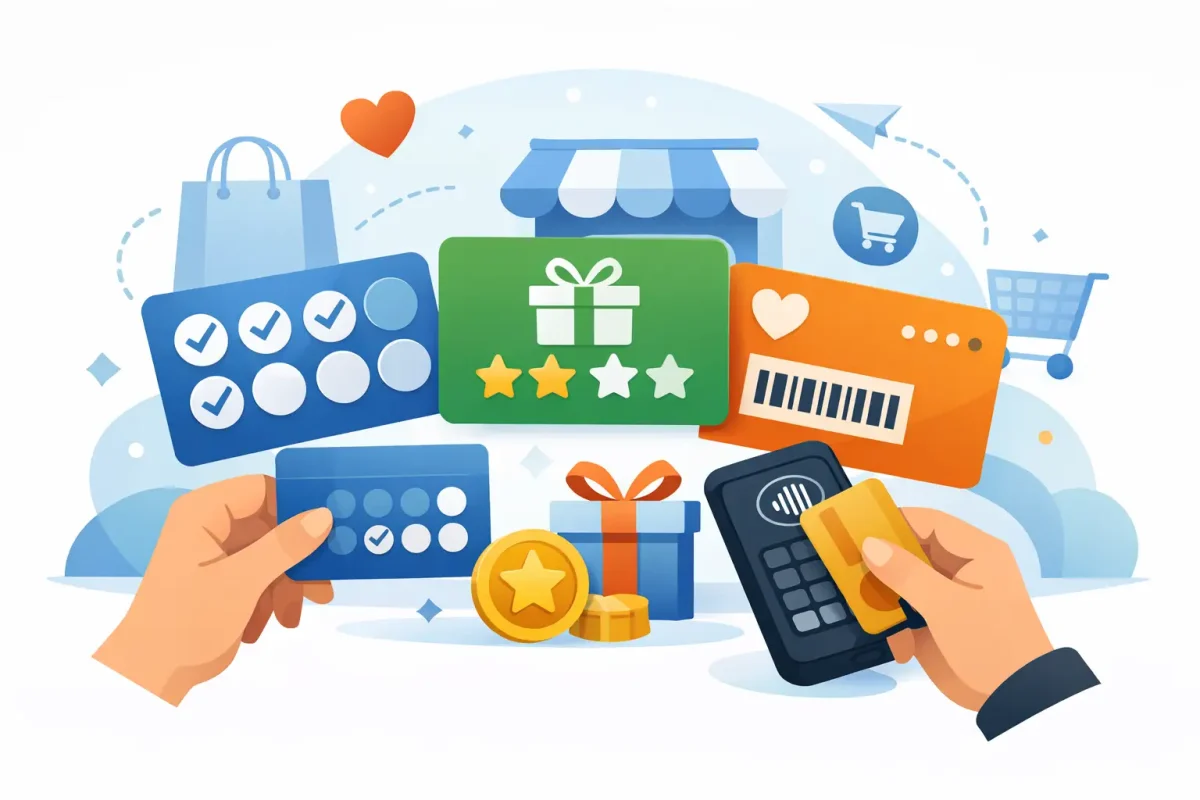
A loyalty scheme only works if customers understand it in seconds. At the till, at reception or over a coffee order, no one wants a complicated pitch. The best loyalty card programme examples are simple to issue, easy to redeem and clearly tied to how people actually buy.
For many small and mid-sized businesses, that usually means starting with print. A physical loyalty card is immediate, low-friction and visible every time it comes out of a purse or wallet. It also gives your brand something digital-only schemes often miss – presence on the counter, in the hand and in the routine of repeat visits.
What good loyalty card programme examples have in common
The strongest programmes do three things well. First, they reward behaviour that already happens regularly, rather than trying to force a new habit. Second, they make the benefit obvious from the start. Third, they fit the value of the transaction.
That last point matters. A coffee shop can justify a straightforward stamp card because purchase frequency is high and the average spend is modest. A salon or hotel needs a different structure because customers visit less often, spend more and may book across several services.
Printed loyalty cards are particularly useful where transactions happen in person and staff need a quick, reliable system. They are also a sensible option for independent operators who want a branded, professional scheme without the setup costs and admin of a custom app.
Loyalty card programme examples by business type
1. The classic stamp card for cafés and takeaway counters
This is still one of the most effective loyalty card programme examples because it matches customer behaviour perfectly. Buy nine coffees, get the tenth free. Buy five lunches, get a discounted sixth. There is very little to explain, and redemption feels tangible.
The trade-off is margin control. If your free item is too generous, the scheme can eat into profit. If the reward is too weak, customers stop caring. The right answer usually sits somewhere in the middle – enough value to matter, but not so much that regular trade becomes unprofitable.
From a print perspective, these cards need to be compact, durable and easy to mark with a stamp or punch. Clear spaces, a visible reward line and simple branding do most of the work.
2. The points card for independent retailers
Retailers often need more flexibility than a simple buy-X-get-Y model. A points-based card lets you reward across different basket values, product ranges or seasonal promotions. Spend thresholds can be set so that customers feel progress building rather than waiting too long for a benefit.
This format suits gift shops, fashion retailers, beauty suppliers and specialist food shops. It is especially useful where one customer may spend £12 on one visit and £80 on the next. Instead of treating every transaction the same, the scheme reflects actual spend.
The challenge is clarity. If points conversion feels vague, customers lose interest quickly. Printed cards work best here when combined with a simple rule such as a stamp per £10 spent, or a staff-written points tally that can be checked at purchase.
3. The visit-based card for salons and barbers
Salons and barbers benefit from loyalty schemes that reward repeat attendance, not just spending. A card that offers a treatment upgrade, product discount or free service after a set number of visits can encourage rebooking without making the scheme feel overly promotional.
This is one of the more reliable loyalty card programme examples for service-led businesses because it reinforces routine. If a client knows their sixth appointment includes a benefit, they are less likely to drift to a competitor between visits.
Good design matters here. Salon cards should feel part of the brand experience, not like an afterthought. Premium stock, foil details or plastic card formats can help if your business trades on presentation and customer experience.
4. The membership-style card for gyms and studios
A gym, yoga studio or fitness business may use loyalty less for free items and more for member retention. A printed card can support referral perks, class attendance rewards or milestone achievements. For example, after ten classes, the member receives a guest pass or branded item.
This approach works because it turns attendance into progress. It is less about discounting and more about engagement. That can protect margins better than a heavy offer-led model.
The limit is administrative effort. Staff need to update the card consistently, and the reward rules must stay manageable. If the system becomes too varied, it slows down reception and creates confusion.
5. The tiered loyalty card for hospitality venues
Restaurants, pubs and bars with a broad offer sometimes benefit from a tiered structure. Rather than one fixed reward, customers move through levels based on visits or spend. Entry-level rewards may be modest, while higher tiers bring stronger offers such as priority booking perks or exclusive event invitations.
This is useful where customer value varies widely. A regular lunch customer and a weekend private dining customer should not necessarily receive the same benefits on the same schedule. Tiering gives you room to reward stronger accounts without over-giving across the board.
Printed cards can support this by using clearly labelled levels or upgraded card designs. If you take this route, keep it simple. Three levels are usually more practical than five.
6. The prepaid loyalty card for car washes and service businesses
Some service businesses combine loyalty with prepayment. A customer buys a card loaded with a set number of washes, treatments or appointments and receives one extra use as the incentive. This gives immediate cash flow to the business while encouraging repeat custom.
It is a practical model for car washes, tanning salons, play centres and some wellness services. Customers like the sense of value, and the business benefits from upfront commitment.
Plastic cards are often the strongest fit here because they last longer and look more credible for stored-value or multi-use purposes. If the business trades on reliability and efficiency, the card should reflect that.
7. The seasonal loyalty card for tourism and events
Not every business needs a year-round scheme. Attractions, pop-up operators, Christmas markets and summer venues may get better results from a seasonal card tied to a fixed campaign period. Visit three times during the season, or spend across multiple event dates, and receive a reward.
This avoids the common problem of a loyalty scheme dragging on after customer demand has shifted. It also gives you a clear promotional window and an easy point to refresh the design each season.
Short-run print is useful here because quantities can match campaign length. You are not left with outdated cards when dates, offers or branding change.
8. The referral-and-return card for local service firms
Some businesses need loyalty to do more than reward repeat buying. Dental practices, estate agents, garages and professional services may want to recognise referrals as well as return visits. A printed card can track both – for example, one mark for a booked service and an extra mark for a successful referral.
This only works if the staff process is clear. Referral schemes can become awkward if customers do not know when credit is applied. Keep the language direct and the reward realistic.
For businesses where trust matters, the card should look professional rather than gimmicky. Clean branding and straightforward wording usually outperform overdesigned layouts.
9. The hotel guest reward card
Hotels can use printed loyalty cards for on-site spend as well as stays. That may include bar purchases, restaurant visits, spa treatments or repeat bookings. For independent hotels, this can be more practical than trying to compete with large chain apps and points systems.
A local or regional hotel often wins on service and experience, so the reward should support that. A room upgrade, late checkout, complimentary drink or dining credit usually feels more relevant than abstract points.
Because guests may keep the card over a longer period, durability matters. A well-produced card reinforces the standard of the property from the first check-in onward.
10. The hybrid gift and loyalty card for retail and beauty
A useful option for some businesses is combining gifting and retention. The customer buys a branded card that can be loaded as a gift, then reused as a loyalty card after redemption. This is particularly effective in salons, spas and premium retail where presentation plays a bigger role in the sale.
It adds value because one printed product supports two stages of the customer journey – acquisition first, repeat purchase after. It also keeps your branding in circulation for longer.
The format needs thought. If the card feels too generic, it loses impact as a gift. If it is too complex, it becomes awkward to process. The strongest version is usually a well-finished plastic card with clear branding and a simple loyalty mechanic attached.
Choosing the right printed format
The best scheme is not always the most advanced one. It is the one your staff can manage consistently and your customers can grasp immediately. For many businesses, a printed card remains the most practical starting point because it is visible, affordable and easy to launch.
Paper cards suit high-volume, fast-turn transactions such as cafés and takeaways. Plastic cards are a stronger fit where durability, presentation or stored value matter more. Premium finishes can also make sense if your brand sits in hospitality, beauty or retail categories where appearance affects perceived value.
Before printing, check the basics. How will staff mark or validate the card? What happens when a customer loses it? Is the reward still commercially sensible if uptake is strong? Those questions are less exciting than artwork choices, but they usually determine whether the scheme lasts.
A loyalty card should not feel like a gimmick added at the counter. It should look like part of the business, work like part of the business and support repeat custom without slowing anything down. If you get that balance right, print stops being a nice extra and starts doing a very practical job.