


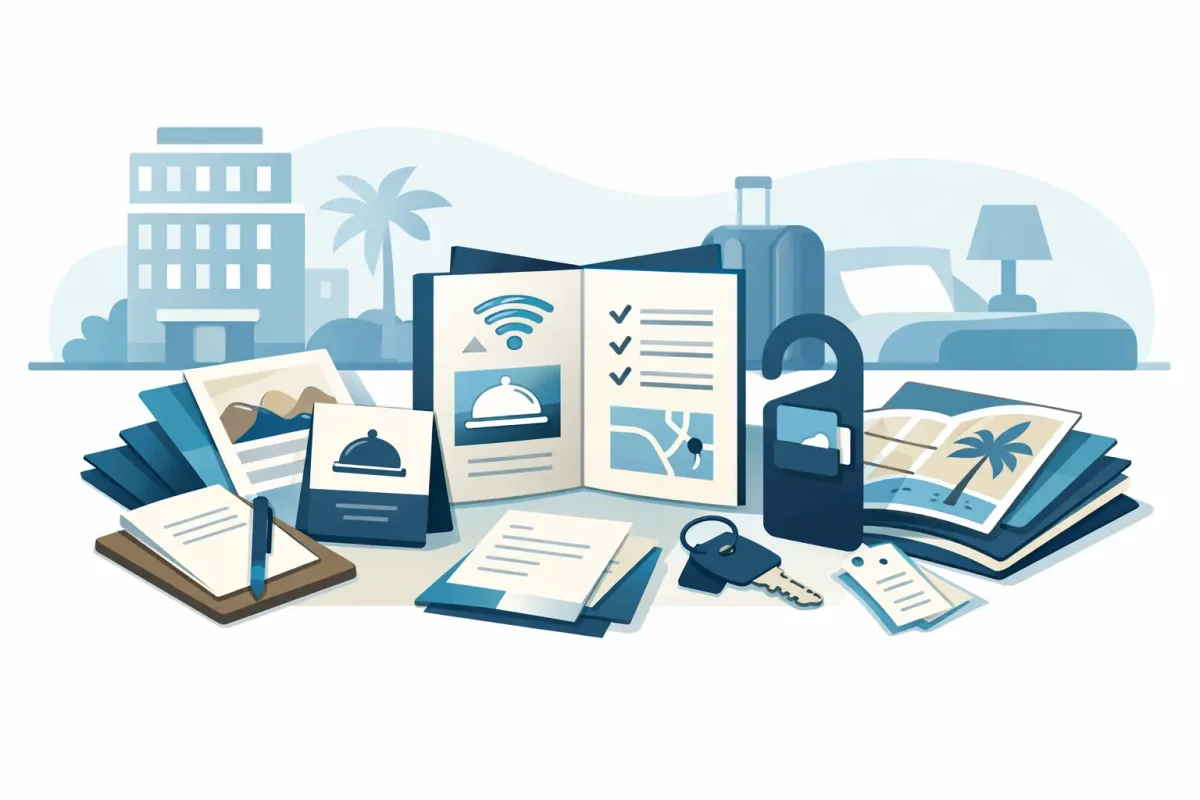
A guest can tell within minutes whether a hotel feels considered or merely functional. The check-in card, the bedroom door hanger, the room service menu and the welcome folder all do quiet work in the background. Choosing the best hotel guest print essentials is not about filling a reception desk with paper. It is about giving guests clear information, reducing friction for staff and keeping the brand consistent from arrival to departure.
For independent hotels, boutique stays and growing hospitality groups, printed items still carry a lot of operational weight. Digital tools matter, but print handles the moments guests need fastest – when they are standing at reception, settling into a room, ordering food or looking for basic information without opening an app. The right mix depends on property style, service level and turnover, but some essentials earn their place in almost every hotel.
What counts as the best hotel guest print essentials?
The best hotel guest print essentials are the items guests actually touch, read or rely on during their stay. That usually means practical print rather than decorative extras. If a printed product improves navigation, supports service, presents information clearly or reinforces quality, it belongs on the shortlist.
Hotels often over-order low-value collateral and under-specify the items that shape guest perception. A folded leaflet on thin stock can make a premium room feel less premium. On the other hand, a well-produced key card, neatly finished guest folder or durable in-room menu can lift presentation without creating unnecessary waste. The commercial question is simple: does this item help the guest experience and justify its production cost?
1. Key cards and card carriers
For most modern hotels, plastic key cards are the starting point. They are handled by every guest, used repeatedly and seen at the exact moment first impressions are formed. That makes them one of the strongest branded print items in the building.
A plain card works, but a custom printed card does more. It reinforces identity, supports a more professional arrival experience and can carry useful information such as Wi-Fi details, check-out times or a simple contact number. Card carriers add another layer of presentation and can help organise the handover at reception.
The trade-off is cost versus longevity. If your property has high card loss rates, a premium finish may not always be the most economical choice. But for boutique hotels, premium rooms and venues that trade heavily on presentation, better card print is often worth it.
2. Guest welcome folders
A welcome folder pulls scattered information into one place. It can hold room details, dining information, local recommendations, spa details, emergency contacts and branded inserts without looking cluttered.
This is especially useful for hotels that offer more than a simple bed and breakfast stay. If guests need to understand restaurant booking times, room service options, leisure facilities or upgrade offers, a folder keeps those messages tidy and easy to update.
Good folders need enough structure to feel durable, but not so much bulk that they become awkward in-room. Hotels with frequent offer changes may prefer interchangeable inserts rather than fully printed packs, while smaller properties with stable services may find a fixed format more cost-effective.
3. In-room menus and service directories
Printed menus remain one of the most dependable hotel print items because they serve immediate guest needs. A room service menu, drinks list or service directory should be easy to read in poor lighting, quick to scan and durable enough for repeated handling.
This is where material choice matters. A menu that warps, marks easily or looks tired after a few uses quickly drags the room standard down. Equally, over-engineering the finish for a simple service offer may not be sensible. The best option depends on how often content changes and how heavily the item is used.
For hotels with strong food and beverage revenue, menus deserve more attention than they often get. They are not just informational. They influence ordering behaviour, upsell opportunities and how polished the whole stay feels.
4. Door hangers and privacy signage
Few items are more practical than a well-made door hanger. Do not disturb and make up room signs help housekeeping operate efficiently and reduce interruptions for guests. They also get daily use, which means weak print or poor stock choice shows wear quickly.
This category tends to be undervalued because the content is simple. In practice, it is one of the best examples of operational print doing brand work at the same time. A clearly printed, durable hanger with clean branding feels deliberate. A flimsy one feels like an afterthought.
If your hotel has a more premium positioning, quality here matters more than many operators expect. Guests notice the details they physically handle.
5. Reception and wayfinding signage
Not every sign needs to be permanent architectural signage. Printed reception notices, temporary directional signs, event notices and service update boards all help guests move through the property with less confusion.
This became particularly clear for hotels managing flexible dining times, event check-ins and seasonal service changes. Good printed signage reduces repetitive questions for staff and gives guests confidence that they know where to go and what to do.
The best hotel guest print essentials in this area are the ones designed for real use, not just visual consistency. That means clear type, sensible sizing and placement that matches actual guest movement. Attractive signage that fails to answer practical questions is not doing its job.
6. Breakfast cards, table talkers and restaurant print
Where hotels serve breakfast, lunch or evening meals, restaurant print supports both operations and spend. Breakfast cards can clarify service times, table numbers or booking details. Table talkers can highlight specials, drinks, desserts or local offers without relying on staff to mention every option.
There is a balance to strike. Too much table print can make a dining space feel cluttered. Too little can mean missed sales and repeated guest questions. For most hotels, a selective approach works best – use print where it informs clearly or encourages a worthwhile add-on.
Properties that host weddings, conferences or private dining often benefit from matching event menus, place cards and function signage too. It keeps the guest journey cohesive and supports a more polished commercial offer.
7. Branded stationery in rooms
Not every hotel needs a full stationery set, but some still benefit from printed notepads, pens, compliment slips or message cards. This is more relevant for premium stays, business-focused hotels and venues where guests may be attending meetings or events.
The key question is whether the stationery is likely to be used. If it simply sits untouched, it adds cost without value. But in the right setting, it reinforces quality and provides another useful touchpoint. Short-stay budget accommodation may skip this entirely, while boutique and corporate-led hotels may see it as part of the expected standard.
8. Loyalty, gift and membership cards
Hotels looking beyond the stay itself should not overlook printed card products. Gift cards, loyalty cards and membership cards can support repeat bookings, spa packages, dining offers and seasonal promotions.
This matters most for hotels with multiple revenue streams. If you sell afternoon tea, wellness access, festive packages or restaurant experiences, a professionally printed card can turn a one-off purchase into a branded product with perceived value. Foil details, quality stock and durable card formats work particularly well where presentation affects purchase decisions.
For some operators, this is a better use of budget than printing more in-room literature. It depends on whether your focus is guest information or guest retention.
9. Event and conference print
Hotels that host meetings and events need guest print that works beyond bedrooms. Delegate packs, agenda inserts, name cards, table plans, directional signs and branded folders all shape how organised the venue appears.
This is one area where inconsistency causes problems fast. If reception signage, meeting room print and delegate materials all look unrelated, the hotel can feel fragmented. A coordinated print set helps business guests and event organisers feel they are dealing with a capable operator.
For commercial teams, this also has sales value. Event clients notice whether a venue can present professionally before the function even starts.
10. Local guides and promotional inserts
A short printed local guide can add value when done well. Guests often want a quick recommendation for taxis, walks, attractions or nearby dining, and many would rather glance at a printed card than search through multiple screens.
The caution here is relevance. Generic tourist leaflets can make a property feel dated. A concise, well-designed local guide tailored to the hotel’s actual audience works better. City hotels may highlight transport and dining, while rural stays may focus on routes, landmarks and seasonal activities.
Promotional inserts can also support upsells such as late check-out, spa treatments or dinner reservations. They work best when the offer is timely and clearly presented, not when every surface carries a sales message.
Choosing print that fits your hotel
Not every property needs all ten categories. A small guest house may need key cards, menus, door hangers and simple signage. A full-service hotel may need the whole range, plus event materials and promotional inserts. The right choice depends on room count, service mix, guest profile and how often information changes.
It also depends on whether you need short-run flexibility or larger-volume consistency. Hotels with frequent updates should avoid locking too much information into hard-to-change print. Hotels with stable core services can often gain better value from more permanent branded materials.
The strongest approach is usually to prioritise the items guests handle most, then build out from there. Start with reception, rooms and dining. Once those basics are working properly, look at retention tools such as gift cards or premium presentation pieces. That is often where a specialist supplier such as Pressola can be most useful – combining everyday hotel print with more branded, tactile formats from one place.
Good hotel print does not need to be excessive. It needs to be useful, durable and consistent with the standard you promise at booking. If a guest can feel that care in the printed details, the rest of the stay starts on firmer ground.